
Everyone remembers the first time they hand a stranger the keys to a place they are responsible for. I do. I checked my phone every twenty minutes that first night, certain something would go wrong. Nothing did. The guest slept, left a kind review, and I realised the thing I had been afraid of was mostly just the unknown. A few years later I was running twelve villas in Azeitão, just outside Lisbon, for a concierge company, managing alojamento local at a volume my nervous first-night self could never have imagined.
So when someone asks me how to become an Airbnb host, I do not start with the romantic version. I start with what actually matters, in the order it actually matters, because getting the sequence right is the difference between a smooth start and a stressful one. This is the guide I wish I had been handed before that first night, built from everything those twelve villas, the apartments I rented out in Qatar during the World Cup, and the ones I manage in Casablanca today have taught me.
First, check that you are even allowed
This is the unglamorous step everyone wants to skip, and it is the one that can shut you down before you begin. Before you photograph a single room, find out the rules where you live: short-term rental regulations, any local licence or registration, what your lease or building rules say, and how it is taxed. In Portugal, alojamento local has its own registration and obligations. Many cities cap nights or require a permit. Skipping this does not make the rules disappear; it just means you find out the expensive way.
Spend an afternoon on this before you spend a euro on towels. It is not exciting, but a host operating legally sleeps well, and a host who guessed does not.
Get clear on the numbers before you furnish anything
A spare room or empty flat feels like free money until you actually count. The booking total a guest pays is not your profit. Before you list, run a rough version of the math you will run forever after: what you will earn at a realistic nightly rate and occupancy, minus cleaning, minus platform fees, minus consumables, minus a share of utilities, minus the slow drip of maintenance and replacements.
I have watched hosts (and myself, early on) confuse payouts with earnings and get a nasty surprise months later. Across my twelve villas, two of the "busiest" properties turned out to be the least profitable once I counted how often things broke. You do not need a finance degree, just an honest picture before you commit. I go deep on this in my guide to tracking your Airbnb income and expenses, and starting that habit from your very first booking is one of the smartest things a new host can do.
Set up the space like a guest, not an owner
Once you are clear to host and the numbers work, the property itself comes next, and the trick is to stop seeing it as your space and start seeing it as a stranger's first impression. Walk in your own front door as if you have never been there. Where would you put your bags? Where is the light switch? Is there somewhere obvious to sit, to eat, to charge a phone?
You do not need to spend a fortune. Guests reward comfort and thoughtfulness far more than expense: a genuinely good mattress, blackout in the bedrooms, fast Wi-Fi, enough kitchen basics to actually cook, and good lighting that does not feel like an office. Buy the things a tired traveller touches, and skip the decorative ones nobody notices. The goal is a home that feels easy, not a showroom.
Photos and a listing that tells the truth
Your photos do almost all the selling, so they deserve real effort: shot in daylight, rooms tidy and styled, the best feature first. If you can afford one professional shoot, it usually pays for itself.
The listing copy matters just as much, and the rule is honesty. Describe the place slightly more modestly than it deserves. Mention the walk-up, the lively square below, the small kitchen. Guests who know exactly what they are booking arrive calibrated, and a calibrated guest is almost impossible to disappoint. Overselling buys you a booking and costs you the review, which is a terrible trade.
Price for momentum at the start
A brand-new listing has no reviews, and guests are nervous about being the first. The way through is to price a little below your target for the first handful of stays, knowing you are buying reviews, not just bookings. Those first five-star reviews are the asset that lets you raise your price later with confidence. Be the obvious-value choice while you have nothing to show, then let your reputation do the pricing once it exists.
Build the guest experience before your first guest arrives
This is the step new hosts most often leave until it is too late, and it is the one that quietly determines your reviews. Before anyone books, decide how a guest will actually move through their stay: how they get in, what they need to know in the first ten minutes, what the rules are, how the place gets reset between guests. Sort this out in advance and your first stays feel calm. Improvise it live and you spend the whole stay answering messages.
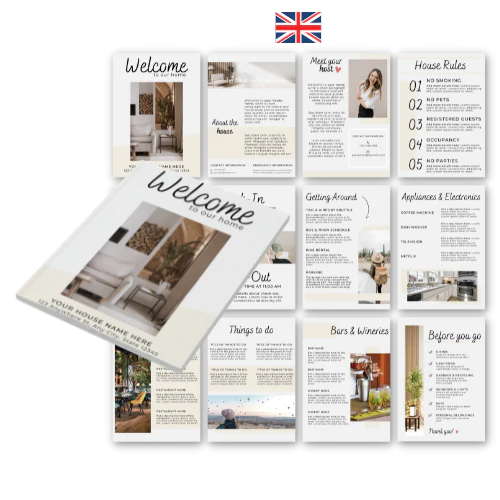
The single highest-leverage thing you can prepare is a clear welcome book: the one document that answers Wi-Fi, check-out, parking, how the appliances work, and where to eat, so a guest never has to text you to function. During the World Cup in Qatar, with guests landing at all hours from every corner of the world, that book did the hosting I physically could not do in person. The rest of the experience is built from a few more pieces:
- A smooth way in. Self check-in done right removes the most stressful part of arrival for both of you. I cover it in my self check-in guide.
- Kindly written house rules. Rules that read like care, not warnings, get followed and leave no bad taste. Here is the exact wording I use.
- A consistent clean. A written cleaning checklist keeps every turnover at the same standard, whether you clean it or someone else does.
- Tidy in-home signage. A matching set of printable posters for the things guests forget mid-stay.
You do not have to assemble all of this from scratch. When I set up a new property now, I start from the complete host toolkit bundle, which gives me the welcome book, the checklists, the trackers and the posters as one editable set, so a new listing has a professional guest experience on day one instead of month six. If you only want the cornerstone piece to begin with, the welcome book template is the place to start.
Plan the operations, even for one property
Hosting one place still has a rhythm: messages to answer, turnovers to schedule, supplies to restock, numbers to record. Decide early whether you will clean yourself or hire out, where you will buy consumables, and how you will keep track of bookings and money. Even with a single listing, a light system beats living in your inbox. The habits you set with one property are exactly the ones that let you add a second without doubling your stress, something I learned firsthand scaling to twelve. I wrote up that whole scaling system in my guide to managing multiple Airbnb properties.
Launch, then improve from real feedback
You will not get everything perfect before your first guest, and you should not try to. Launch when the basics are solid: legal, clean, well-photographed, clearly explained, fairly priced. Then treat your early reviews and guest questions as a free improvement list. Every question a guest had to ask is a gap your welcome book should have closed. Every small complaint is a cheap lesson. Fix the gaps as they appear and your listing gets sharper with each stay.
That is the real loop of hosting: set it up thoughtfully, launch, listen, refine. The nervous first night fades fast. What remains is a small business you can actually run, and even grow, if you build it on the right foundations from the start.
Start with the foundation, not the furniture
If you take one thing from this guide, let it be the order. Sort the legal side, run the numbers, set up the space honestly, and build the guest experience before your first guest arrives, not after your first bad review. Everything else is detail you can refine as you go.
When you are ready to set up the guest side properly, the fastest path is to start from a system that already works. The complete host toolkit gives you the whole guest experience in one editable bundle, and a clear welcome book alone will do more for your first reviews than almost anything else you buy. Get the foundation right, and that first nervous night becomes the start of something you are genuinely good at.