
During the World Cup in Qatar, I was renting out apartments and villas to guests arriving from every corner of the world, sometimes several check-ins in a single day. On paper I was a short-term rental host. In practice I was running something much closer to a small hotel: arrivals at every hour, guests who expected everything to simply work, and no front desk to absorb the questions.
That season taught me something that applies far beyond Airbnb. Whether you run a bed and breakfast, a guesthouse, a small boutique hotel or a set of serviced apartments, your guests all share one behaviour: they will not remember what you told them at check-in, and they will not call reception for something they feel they should be able to find themselves. What they will do is look around the room for answers.
That is the job of a hotel welcome book. And after building these books for my own properties in Portugal, Qatar and Morocco, I can tell you exactly which pages guests read, which pages they photograph, and which pages they never open at all.
Why a welcome book matters even when you have a reception
The classic objection from small hotel and B&B owners is simple: "Guests can just ask us." Here is why that logic breaks down in practice.
First, your reception is not always staffed. In most B&Bs and guesthouses, the owner is also the cook, the cleaner and the bookkeeper. The guest who wants the Wi-Fi password at 11 p.m. is not going to knock on your private door, and you do not want them to.
Second, guests forget. You can deliver a perfect two-minute welcome speech at check-in, and thirty minutes later the guest remembers none of it. They were tired from travelling, holding luggage, thinking about dinner. Verbal information evaporates; written information waits patiently on the desk.
Third, many guests simply prefer not to ask. Some feel embarrassed asking a "basic" question. Some do not speak your language confidently. During the World Cup my guests came from Argentina, Japan, Morocco, England and everywhere in between. A clear written page in simple English answered questions that many of them would never have asked out loud.
A welcome book is not a replacement for your hospitality. It is your hospitality, extended to the hours when you are asleep and the guests who will never ask.
What guests actually read (and what they skip)
Across hundreds of stays, the pattern is remarkably consistent. Guests read, in roughly this order:
- The Wi-Fi page. Always first, always photographed. If your network name and password are not findable in ten seconds, the book has failed.
- Breakfast and meal times. In a B&B this is the page guests check twice: the evening they arrive and again before they sleep. Times, place, and how to mention allergies or requests.
- The practical basics of the room. Air conditioning, heating, hot water quirks, how to open the window, where the extra blanket lives.
- Your local recommendations. The page guests screenshot and take out with them. Not twenty options, three or four honest ones: where to eat tonight, where to get coffee tomorrow, the one thing they should not miss.
- Getting around. Taxis, buses, parking, walking times. In Casablanca, where I manage apartments today, transport questions outnumber every other topic except the Wi-Fi.
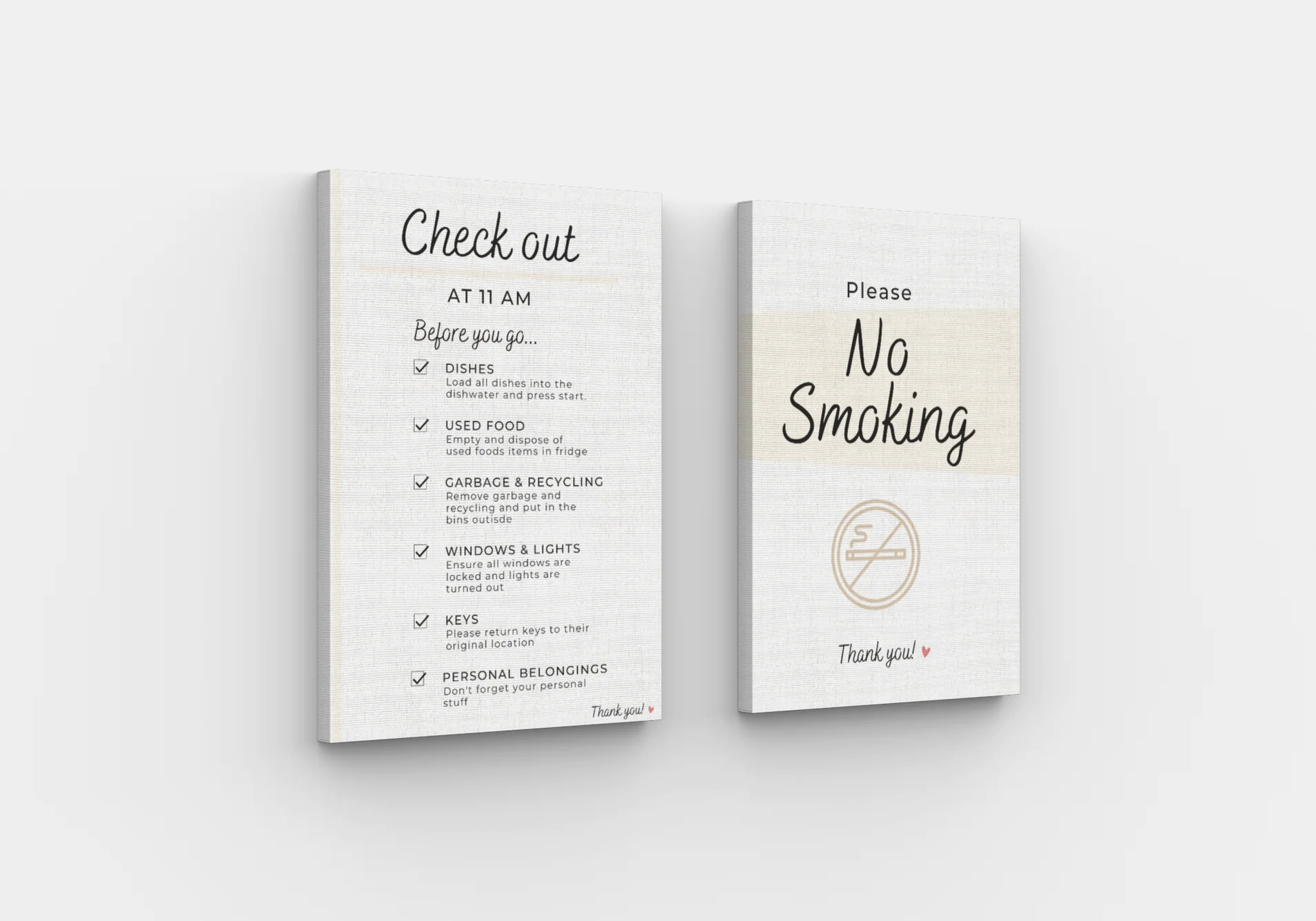
- Check-out instructions. Read once, the night before departure. Time, key handling, luggage storage if you offer it.
And here is what they skip: the three-page history of the building, the mission statement, the long welcome letter that says nothing practical, and any block of text without a heading. I learned this the humbling way, by writing those pages myself and watching guests flip straight past them. Keep the story of your house to a warm paragraph; give the rest of the space to answers.
What a hotel or B&B book includes that an Airbnb book does not
If you have read my complete guide to the Airbnb welcome book, the core structure will look familiar: arrival essentials first, house information, local guide, safety details. A hospitality business adds a layer on top:
- Service hours. When reception is staffed, when breakfast is served, when the kitchen closes, when quiet hours begin. Guests plan their day around these lines.
- An after-hours contact. One phone number for the moment something genuinely cannot wait. Written clearly, it reassures guests and, paradoxically, gets used less.
- The services you offer. Laundry, luggage storage, airport transfers, packed breakfasts for early departures, extra beds. Guests cannot buy what they do not know exists, so this page quietly pays for the whole book.
- Room-by-room quirks. In a guesthouse, room 2 has the shower that needs a moment to warm up and room 4 has the window that sticks. A short note in the right room prevents a complaint before it forms.
- House etiquette. Shared spaces change the rules. When the lounge is available, how breakfast seating works, what is self-serve and what is not. Say it kindly, the way you would to a friend staying over.
Everything else carries over directly from the rental world. The safety page (fire exits, extinguisher, emergency numbers) matters even more in a building with multiple rooms. And if your rooms have appliances guests operate themselves, a kettle with a temperament or an unusual coffee machine, write each one a short entry, exactly as I described for appliance instructions guests actually follow.
Structure it around the guest's day, not your org chart
The best books I have built are organised by moment, not by department:
1. Arrival. Wi-Fi, room basics, service hours, after-hours contact. Everything a tired guest needs in the first ten minutes. 2. The first morning. Breakfast, coffee, how the day starts. This is where a B&B wins or loses its review. 3. The stay. Local recommendations, transport, your services, house etiquette. 4. Departure. Check-out time, keys, luggage, how to book again directly.
A guest flipping through the book should always land near what they need, because the book follows the same order their questions arrive in. If you also welcome guests who arrive without meeting you, the arrival section deserves special care; my guide to a smooth self check-in applies to guesthouses just as well as rentals.
Printed in the room, digital before arrival
Do both; they cover different moments. The printed copy lives on the desk or bedside table and answers the mid-stay questions. The digital copy, a PDF or a link sent with the booking confirmation, works before the guest ever arrives: how to find you, where to park, what time breakfast starts. During the World Cup, sending the book ahead of arrival was the single change that most reduced my message volume, because guests landed already oriented.
A small trick that punches above its weight: print a QR code on the welcome page that opens the digital version. Guests photograph it once and carry your recommendations around the city.
Building yours without hiring a designer
You do not need design skills, and you should not start from a blank page. I build mine from a guest welcome book template that is fully editable in a free Canva account: swap in your photos, your service hours, your recommendations, and export a clean PDF the same afternoon. It comes in five languages, which matters the moment your guests do not all book in yours. The same structure works for a rental apartment, a B&B room or a boutique hotel suite, because the guest's questions barely change; my guide to the vacation rental welcome book covers the multi-platform side of that.
If you want to go further than the book itself, the complete host toolkit bundle adds the pieces a small hospitality business ends up needing anyway: cleaning checklists for consistent turnovers, printable signs, and the templates that keep the operation looking as professional as the welcome.
One last thing, learned across three countries: the book is never finished. Every question a guest still has to ask you is a page the book is missing. Update it, and it keeps quietly earning its keep, stay after stay, long before the review that says "everything was so easy". That sentence, as I explained in how to get five-star reviews, is the one that sells the next ten bookings.